How to Audit Your Own Rates Before Everyone Else Does
The prices you carefully negotiated with insurance companies are no longer private. Due to new transparency rules, this information is now public. Anyone can see it, from your patients to your competitors to the health plans themselves.
This shift can feel sudden, but it also presents a major opportunity. The best thing you can do is be the first person to closely examine your own numbers. This post will walk you through how to do a simple review of your rates, so you can find any issues before someone else does.
Taking a proactive look at your own rates puts you in a position of power. When you understand your own data, you are prepared for conversations with payers and can answer questions from patients. You can spot potential problems early and address them. It gives you control over your practice's financial story and helps you walk into any negotiation with confidence.
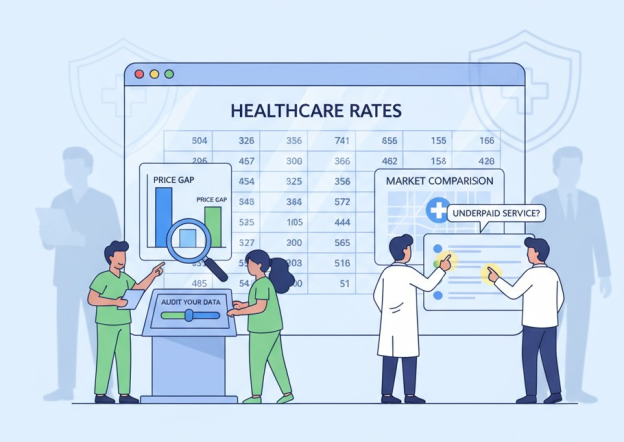
Look for Large Gaps Between Payers

Start with a simple step. Pick one of your most common services. Now, look at what different insurance plans pay you for that single service. Do you see a big difference in the payment amounts? For example, does Plan A pay you $100 while Plan B pays you $500 for the exact same work?
This is a key piece of information. A payer giving you $500 will see that you are willing to accept much less from another plan. The plan paying $100 will see no reason to increase your rate. Big gaps like this can weaken your position when it is time to negotiate your contracts.
See How Your Rates Compare in Your Area
Your prices are not just being compared to your own contracts. They are also being compared to other providers in your local market. Check to see where you stand. Are you the most expensive for certain procedures? If so, you need to have a clear reason why, like offering higher quality or more convenience.
Or are you the least expensive? While this might sound good, it could also mean you are not being paid what you are worth. This is valuable information, as it shows you may have room to ask for higher payment in your next negotiation.
Find Your Underpaid Services
As you review your numbers, you will likely find a few surprises. You might discover that certain services, especially ones that require a lot of your time, are being paid at a very low rate. This is not a failure; it is an opportunity. This data gives you solid proof you can use to ask for a rate increase for those specific services.
Take Control of Your Practice's Financial Future
Reviewing your own rates is now a fundamental part of running a successful practice. It allows you to move from a defensive position to an offensive one. You can fix your weaknesses, understand your strengths, and use that knowledge to build a stronger financial future for your practice.
The transparency rules that are making your rates public might feel threatening, but they actually give you a competitive advantage when you use them wisely. By auditing your own rates first, you gain valuable insights that can improve your contract negotiations, strengthen your market position, and ensure you're being fairly compensated for the care you provide.
Start your rate audit today and take control of your practice's financial story.


